

What Is the Best Age to Use a Baby Carrier?
A baby carrier can make everyday life much easier for new parents. Whether you are going for a short walk, doing household chores, traveling, or simply want to keep your baby close, a carrier provides a convenient way to carry your little one while keeping your hands free.
However, many parents wonder about the best age to use a baby carrier. Can you use one with a newborn? Is it safe for a 3-month-old? When can a baby face outward? And how long can a toddler stay in a carrier?
The answer depends on your baby's age, weight, developmental stage, and the type of carrier you choose. Some carriers are specifically designed for newborns, while others are better suited for older babies and toddlers.
In this guide, we will explain everything parents need to know about choosing and using a baby carrier safely, from the newborn stage through the toddler years.
Can You Use a Baby Carrier for a Newborn?

Yes, baby carriers can be used from the newborn stage, but not every carrier is suitable for newborns.
If you are planning to carry a newborn, look for a carrier that clearly states that it is suitable for newborn use. Some structured carriers require a minimum weight, while others may need a special newborn insert.
For newborns, proper positioning is particularly important because they do not yet have strong head and neck control. The carrier should provide adequate support for the baby's head, neck, back, and hips.
When considering the best age to use a baby carrier, remember that age alone is not enough. Your baby's weight, development, and the manufacturer's recommendations are equally important.
Things to Check Before Using a Carrier With a Newborn
- Check the carrier's minimum weight requirement.
- Make sure your baby's face and nose remain uncovered.
- Keep the baby's chin away from the chest.
- Ensure the baby's head and neck are properly supported.
- Follow the manufacturer's instructions.
- Check that the baby's legs and hips are positioned correctly.
What Age Can Babies Start Using a Carrier?
There is no single age that works for every baby. Many newborn-friendly carriers can be used from birth, while other models may only be appropriate once a baby reaches a certain weight or developmental stage.
Parents should always check the carrier's specific instructions before placing their baby inside.
For many families, the first few months are when a carrier becomes especially useful. Babies often want to be held frequently, and a carrier allows parents to keep their baby close while having their hands available for other tasks.
The best age to use a baby carrier therefore depends on the particular carrier and whether it provides the support your baby needs at that stage.
Baby Carrier by Age: Newborn to Toddler
Different stages of development require different considerations. Here's a simple guide to help parents understand how carrier use may change as their child grows.
0–3 Months: Newborn Stage
At this stage, babies have limited head and neck control. A newborn-friendly baby carrier should provide excellent support and allow the baby to remain in a safe, upright position.
Parents should generally keep the baby facing inward toward their body during this early stage. The baby's airway should remain clear and visible.
A soft baby carrier or newborn-compatible wrap may be suitable, depending on the manufacturer's instructions.
3–6 Months: Growing Baby
As babies develop better head and neck control, carrying can become easier. However, parents still need to make sure the carrier provides proper back and hip support.
Some babies may become more interested in their surroundings during this period. Even so, outward-facing carrying should only be considered if the carrier specifically allows it and the baby has reached the required developmental stage.
6–12 Months: Active Baby
Babies become much more curious and mobile during this stage. A supportive ergonomic baby carrier can be useful for walks, shopping trips, travel, and outdoor activities.
Depending on the carrier design and manufacturer's guidelines, parents may have more carrying-position options.
At this stage, choosing the best age to use a baby carrier becomes less about whether your baby can use one and more about selecting the right position and carrier configuration for their development.
12–24 Months: Toddler Stage
Many carriers can continue to be used during the toddler years, provided the child remains within the carrier's weight and size limits.
A toddler carrier should provide sufficient support for both the child and the parent's back and shoulders. Hip seat carriers can also be useful for older babies and toddlers who frequently want to be picked up and put down.
Is a Baby Carrier Safe for Babies?
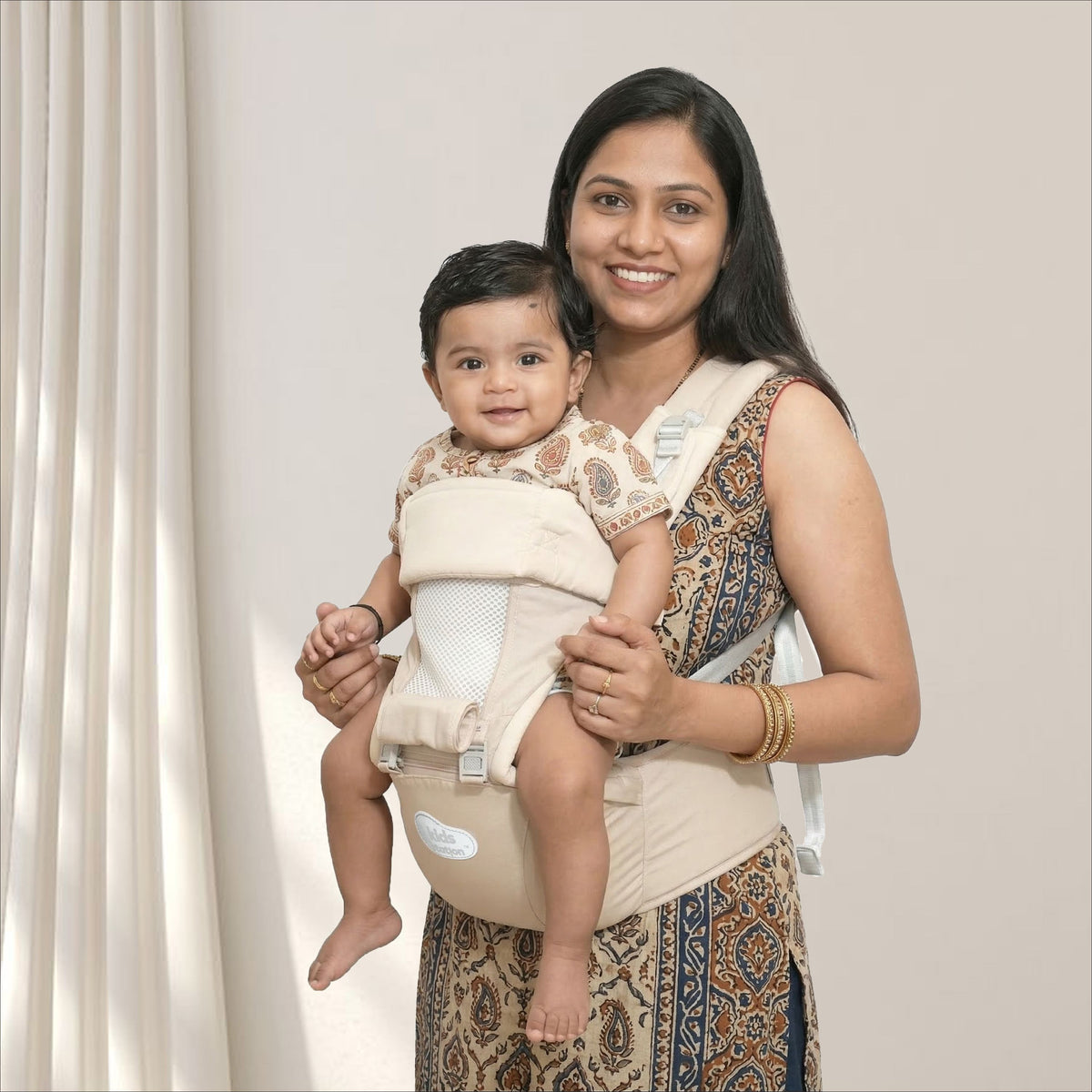
When used correctly and according to the manufacturer's instructions, a properly designed carrier can be a convenient way to carry your baby.
However, parents should pay close attention to positioning and airway safety.
One useful principle is to keep your baby's face visible and ensure that the nose and mouth are not covered by fabric or pressed against your body.
Your baby should also remain high enough for you to easily monitor their face and breathing.
Important Babywearing Safety Tips
1. Keep the airway clear
Your baby's face should always remain visible. Avoid positions where the baby's chin is pressed against the chest.
2. Support the head and neck
Newborns especially need adequate head and neck support because they cannot control their head independently.
3. Maintain proper hip positioning
Choose an ergonomic baby carrier that supports the baby's thighs and allows the legs to assume a natural position rather than hanging straight down.
4. Check the carrier regularly
Before every use, inspect buckles, straps, seams, and fabric for signs of damage or wear.
5. Follow weight limits
Never exceed the manufacturer's recommended weight range.
What Is the Best Position for a Newborn?
For most newborns, an inward-facing position is generally the preferred configuration when the carrier's instructions allow newborn use.
The baby should be positioned high enough that you can easily see their face. Their head should be close enough to kiss, while their airway remains completely unobstructed.
Newborn babywearing requires extra attention because young babies have less control over their head and body.
If you are unsure whether your newborn is positioned correctly, stop and check the carrier's instructions or ask a qualified healthcare professional or babywearing educator for guidance.
When Can a Baby Face Outward in a Carrier?
Outward-facing carrying should not be based simply on a baby's age.
The baby should have sufficient head and neck control, and the specific carrier must be designed and approved for outward-facing use.
Some manufacturers recommend waiting until around 5–6 months, but requirements vary by carrier. Always follow the instructions provided with your particular model.
When a baby is facing outward, parents should also monitor signs of discomfort, overstimulation, or tiredness.
How Long Can a Baby Stay in a Carrier?
There isn't one universal time limit that applies to every baby and every carrier.
Instead, parents should regularly check the baby's position, comfort, temperature, and breathing. Babies should not be placed in a carrier for prolonged periods without monitoring.
It's also important to give babies opportunities to move freely, stretch, and change positions throughout the day.
For newborns and young infants, frequent checks are particularly important because they have limited ability to reposition themselves.
How to Choose the Right Baby Carrier
Choosing the right carrier is just as important as knowing the best age to use a baby carrier.
Here are some factors to consider before purchasing one.
1. Age and Weight Range
Look for a carrier that is specifically designed for your baby's current age and weight. If you want to use the same carrier from newborn to toddler, check whether it genuinely supports the entire range.
2. Ergonomic Design
An ergonomic baby carrier should support the baby's body comfortably while distributing weight appropriately for the parent.
3. Adjustability
Adjustable straps and panels can help the carrier adapt as your baby grows.
4. Comfort for Parents
A carrier shouldn't only be comfortable for the baby. Padded shoulder straps, supportive waist belts, and good weight distribution can make a significant difference for parents.
5. Material
Breathable and lightweight fabrics may be particularly useful in warm climates. Soft fabrics can also make the carrier more comfortable for everyday use.
Baby Carrier vs Baby Wrap: Which Is Better?
Baby wraps and structured carriers can both be useful, but they offer different experiences.
A baby wrap is made from long fabric that is wrapped around the parent's body. It can provide a snug fit and may work well for newborns when used correctly.
A structured baby carrier usually has buckles, adjustable straps, and a more defined support system. It can be easier for some parents to put on and adjust.
The right choice depends on your baby's age, your comfort, lifestyle, and how frequently you plan to use it.
Signs Your Baby May Not Be Comfortable in the Carrier
Even if a carrier is appropriate for your baby's age and size, watch for signs that they are uncomfortable.
These may include:
- Persistent crying
- Unusual fussiness
- Difficulty settling
- Excessive sweating
- Baby's body appearing poorly positioned
- Face becoming covered or difficult to see
- Legs appearing uncomfortable or unsupported
If you notice any safety concern, remove your baby from the carrier and reassess the fit and positioning.
Common Baby Carrier Mistakes Parents Should Avoid
New parents can make simple mistakes when they are learning to use a carrier. Avoiding these can make babywearing safer and more comfortable.
Using an Incorrect Carrier Size
A carrier that is too large or too small may not provide adequate support.
Covering the Baby's Face
Never allow fabric, clothing, or another object to cover your baby's nose or mouth.
Ignoring Weight Limits
Always stay within the carrier's recommended weight range.
Choosing a Position Too Early
Don't switch to a new carrying position simply because your baby seems curious. Check the carrier's developmental requirements first.
Not Adjusting the Carrier as the Baby Grows
Your baby changes rapidly during the first year. Regularly check the fit and adjust straps or panels when necessary.
Final Thoughts
So, what is the best age to use a baby carrier? There isn't one universal age for every child. Some newborn-compatible carriers can be used from birth, while others are designed for babies who have reached a specific weight or developmental stage.
The most important factors are your baby's age, weight, head and neck control, the carrier's design, and the manufacturer's instructions.
Whether you're looking for a newborn baby carrier, an ergonomic baby carrier, a baby wrap, or a toddler carrier, always prioritize proper positioning, clear airways, adequate support, and your baby's comfort.
With the right carrier and safe babywearing practices, carrying your little one can be a comfortable and practical part of everyday parenting.
FAQs
1. What is the best age to use a baby carrier?
The best age to use a baby carrier depends on the carrier model and your baby's size and development. Some newborn-compatible carriers can be used from birth, while others require babies to reach a specific weight or developmental stage.
2. Can I use a baby carrier for a newborn?
Yes, some carriers are specifically designed for newborns. Always check the manufacturer's minimum weight requirements and make sure your baby has proper head, neck, and airway support.
3. When can a baby face outward in a carrier?
A baby should only face outward when they have sufficient head and neck control and the carrier manufacturer specifically allows that position. Check the instructions for your carrier before changing positions.
4. Are baby carriers good for newborns?
Newborn-compatible carriers can be useful for keeping babies close while allowing parents to have their hands free. Proper fit, positioning, and airway visibility are essential.
5. Can toddlers still use baby carriers?
Yes. Many carriers are designed to accommodate toddlers within a specific weight range. A toddler carrier with good back and waist support can make longer walks and outings more comfortable for both parent and child.